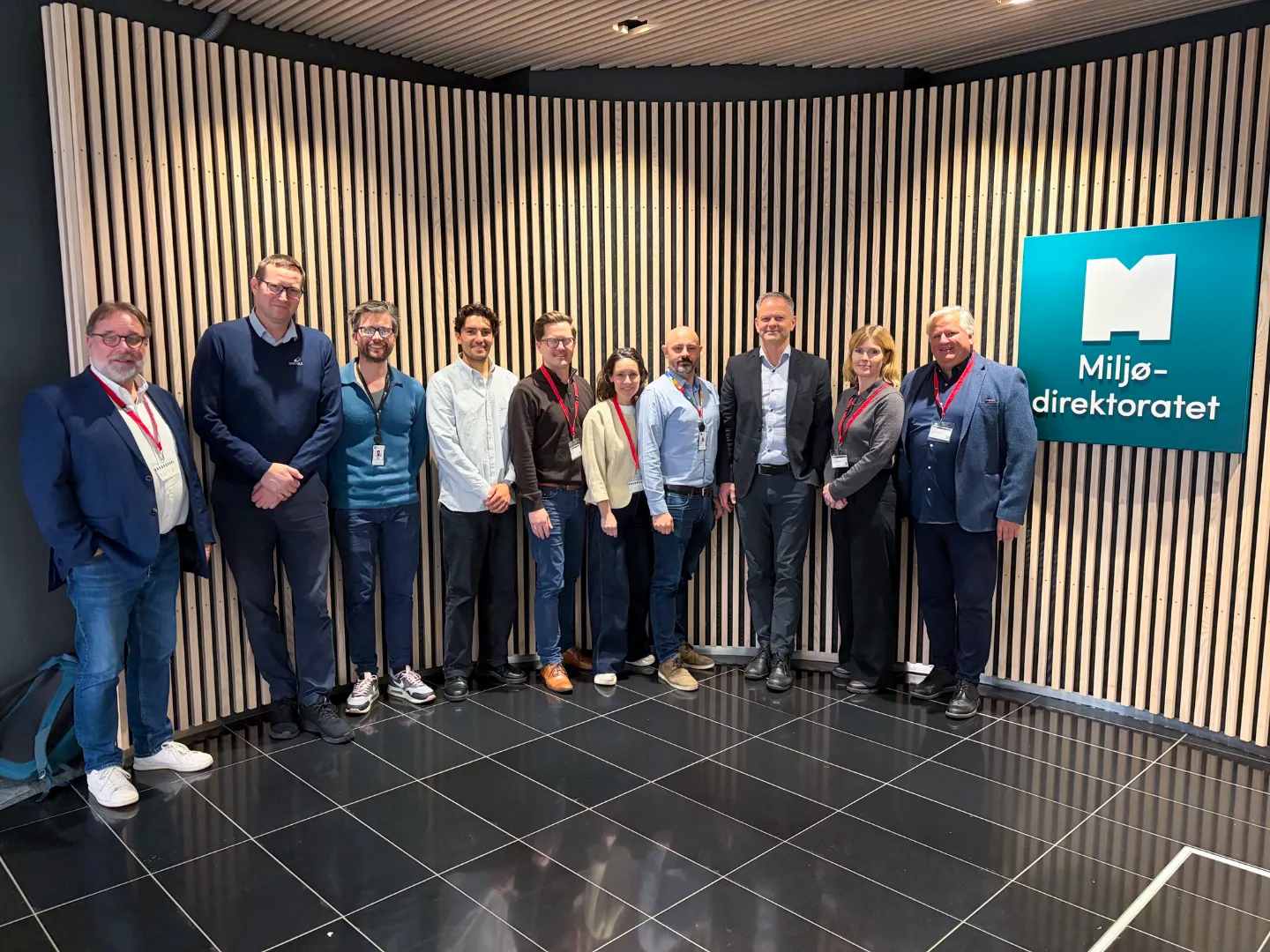
Climate targets must be ambitious, but achievable – and flexible enough to let the industry innovate. These were some of the signals in a recent workshop co-hosted by Maritime CleanTech and the Norwegian Environment Agency.
Leading fast-ferry operators and technology suppliers gathered in Oslo and digitally on 4 November to discuss how climate ambitions for the sector should be aligned with operational and commercial realities.
Stakeholders agreed that zero-emission fast ferries are feasible – but not without challenges. Decarbonising the sector may require rethinking not just propulsion systems but also contracts, timetables, and fleet choices.
“The discussions showed that the industry continues to be ambitious about transforming the fast ferry sector to become more efficient and fit for purpose,” says Øystein Huglen, Head of Technology and Innovation at Maritime CleanTech.
“We see a great potential for both energy saving, decarbonization and improved services if requirements are shifted from rigid time schedules and vessel-sizes to more flexible and goal-oriented route capacity and service requirements. This would allow the industry to innovate, standardize and adjust to inherent technology advantages.”
From pilots to deployment of clean solutions
The meeting was initiated by Maritime CleanTech after a vote in the Norwegian parliament (Stortinget) to implement zero-emission mandates for fast ferry tenders starting in 2029.
The Norwegian Environment Agency (Miljødirektoratet) – which has been tasked with drafting the new regulations together with the Public Roads Administration (Statens vegvesen) and Norwegian Agency for Public and Financial Management (DFØ) – welcomed the invitation to co-host a workshop to gather early feedback from the industry.
The goal of the new policy is to speed up the transition to emission-free solutions while ensuring stable passenger service and a competitive maritime sector.
The first fully electric fast ferry, Medstraum, was launched in 2023 through the TrAM project. Today, 19 of the 92 passenger ferry routes that form part of the public transport system have at least one hybrid or electric vessel in operation (tilnull.no).
In spite of this growth, the development has lagged behind political ambition. Longer routes have proven especially challenging to decarbonise due to the combined requirements of speed, size, and weight. Partly as a result of this, the national climate regulations for ferries which were put in place in 2025 excludes the passenger ferry segment.

No one-size-fits-all solution
The workshop on 4 November explored how fast the zero-emission mandate should be phased in, which exemptions should be allowed, and which technologies can help meet the targets. Stakeholders argued that while many solutions for reducing emissions are available, a blanket zero-emission requirement for all new fast ferry tenders may not be realistic due to widely differing conditions on different routes.
Many argued for a differentiated approach: While shorter routes can be electrified starting today, longer and more demanding routes may require more time for the technology and infrastructure to mature.
Instead of an all-or-nothing approach, allowing exemptions where 100% emissions cuts are not feasible, it was also suggested to let the industry compete to deliver the best and cleanest solutions for each specific route.
While there was broad consensus that electrification is the best option in most cases, some pointed to a role for hydrogen or ammonia on longer routes. All, however, agreed that energy availability and efficient vessel designs will be key to success.
Next steps
After the workshop, Miljødirektoratet and DFØ will finalise their report and draft regulation, which will be submitted to the government. The government will then evaluate the report and proposed regulation and determine further progress.
A public hearing is usually part of the process if the government chooses to go forward with the legislation.
“The Norwegian maritime industry is world-leading in developing and demonstrating clean technologies, and the fast ferry segment is a testing ground for solutions with global export potential. It is crucial that the industry is involved in shaping the policy framework for the sector, and this workshop has been an important step forward,” says Reber Iversen, Analysis and Policy Manager in Maritime CleanTech.