Smarter power for cleaner ships
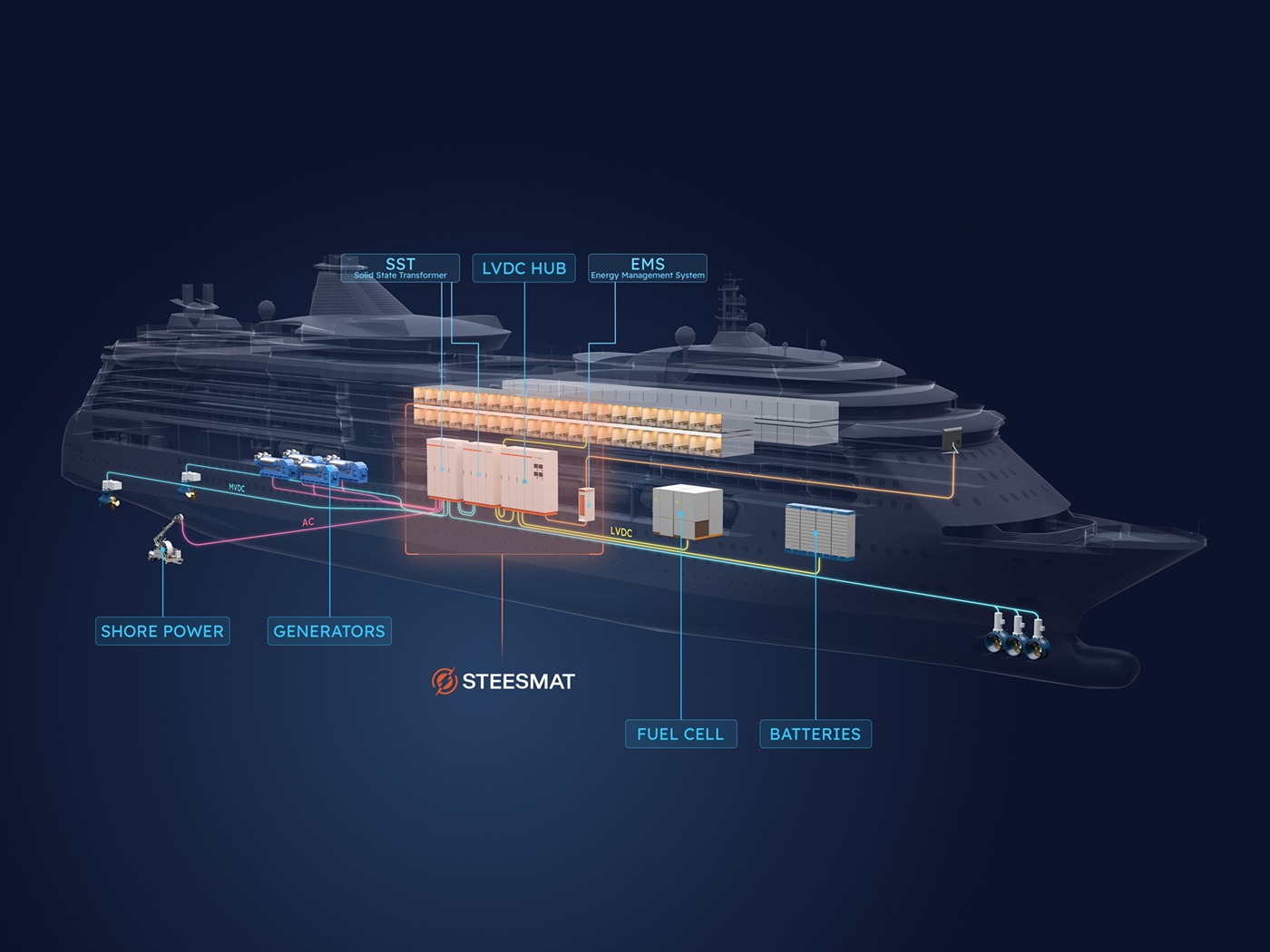
In STEESMAT, a European consortium will demonstrate a new direct current (DC) power system for large vessels, improving energy efficiency and enabling full integration of batteries and fuel cells.
The innovative system will be tested in Energy House and demonstrated onboard a commercial vessel, showcasing how advanced solid-state transformers and intelligent control can reduce fuel use and greenhouse gas emissions.
With €7.75 million in EU support, STEESMAT will deliver a modular, compact, and efficient onboard energy architecture – tested on land and sea – marking a major step toward zero-emission maritime transport.
Key innovations
The STEESMAT project will design, build and validate a modular and scalable onboard DC power system tailored to the needs of high-powered vessels. It focuses on three core innovations:
- A highly efficient solid-state transformer (SST) enabling plug-and-play MVDC-to-LVDC conversion
- A secondary low-voltage DC hub designed to safely integrate batteries, fuel cells, and future energy sources
- A smart energy management and control system for optimizing energy use and reducing emissions
Together, these technologies simplify onboard electrical systems and unlock new possibilities for vessel design, energy flexibility, and emissions reduction.
A strong European consortium
The project brings together a consortium of 13 European partners from Norway, Germany, Finland, France, and Czechia. It brings together industry, research, academia, and non-profits with expertise in maritime technology, power electronics, system simulation, and standardisation.
Together, they are developing and demonstrating a new onboard energy system to support the maritime sector’s green transition.